Goulburn Spring Gardens
17th and 18th OCTOBER 2026
The 2026 Gardens
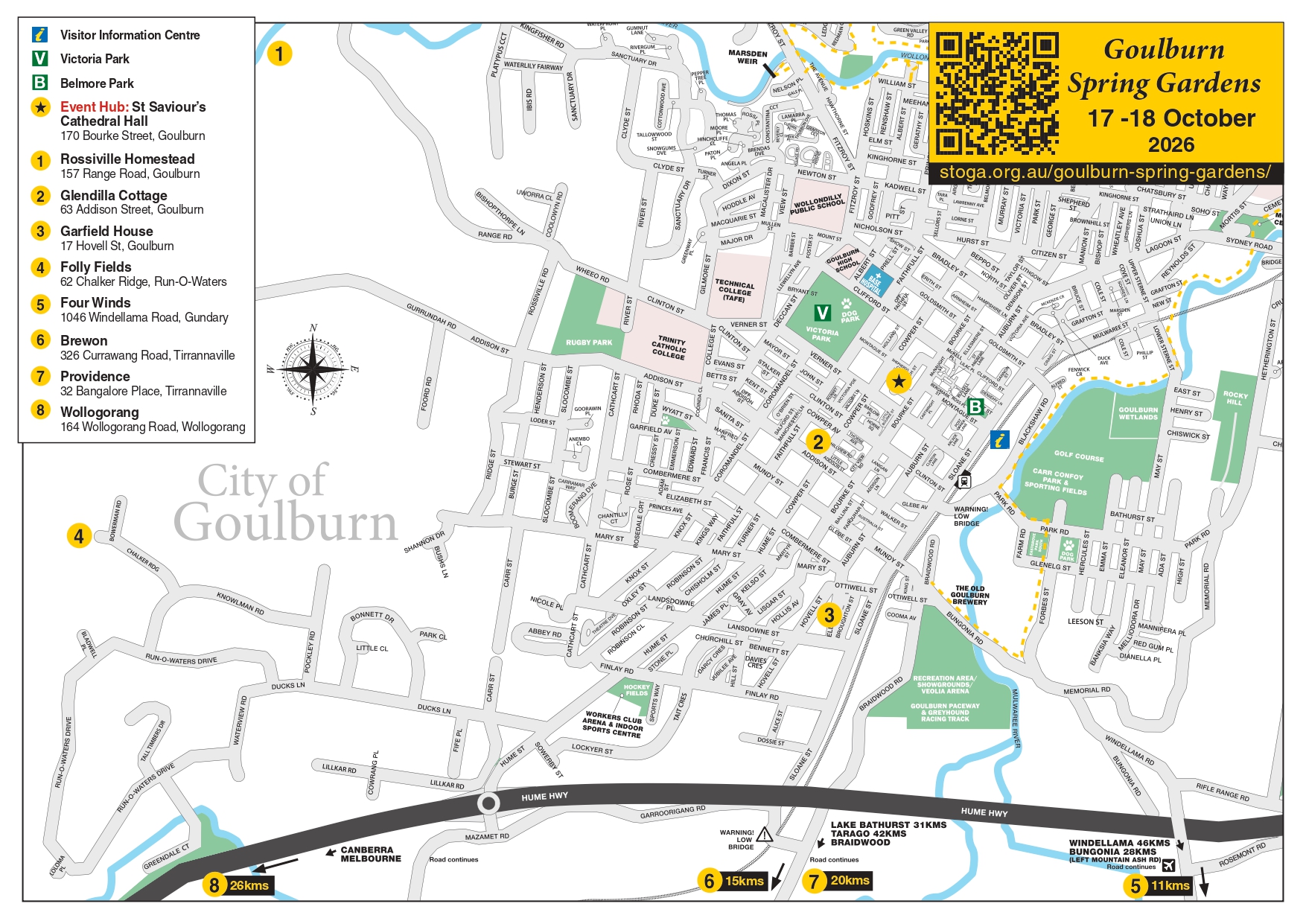
Eight beautiful private gardens in Goulburn and surrounds will open on 17 & 18 October this year, including seven new gardens and one of our favourite gardens from our 2025 event, Rossiville Homestead. All eight gardens will be open from 10am to 4pm on both days.
All Gardens tickets, refreshments, plant stalls, historical information, local arts and crafts, cathedral tours and Goulburn Spring Music performance. All Gardens tickets $25 are available online, from the Event Hub or from each garden. Single garden tickets $5 only at the gardens.
Guide for Garden Visitors
Please read our Guide for Garden Visitors before visiting the gardens.
Just a reminder that Spring marks the start of the snake season. Please stay alert for hazards, including the possibility of snakes, particularly in our larger country-style gardens.
Bathrooms
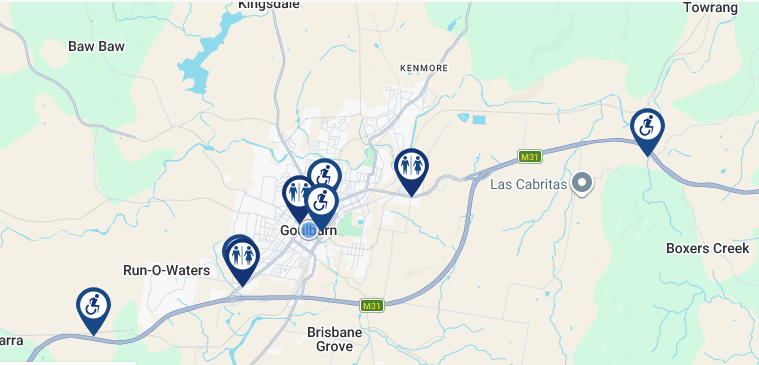
Please be aware that, unless otherwise indicated, there are no toilets available for Visitors in the gardens. Bathroom facilities will be available at the Event Hub or you can consult the Australian Government’s National Public Toilet Map for available public toilets in Goulburn.
1. Rossiville Homestead
157 Range Road, Goulburn
Landscape Architect, Michael Bligh, will be on site on Sunday 18 October
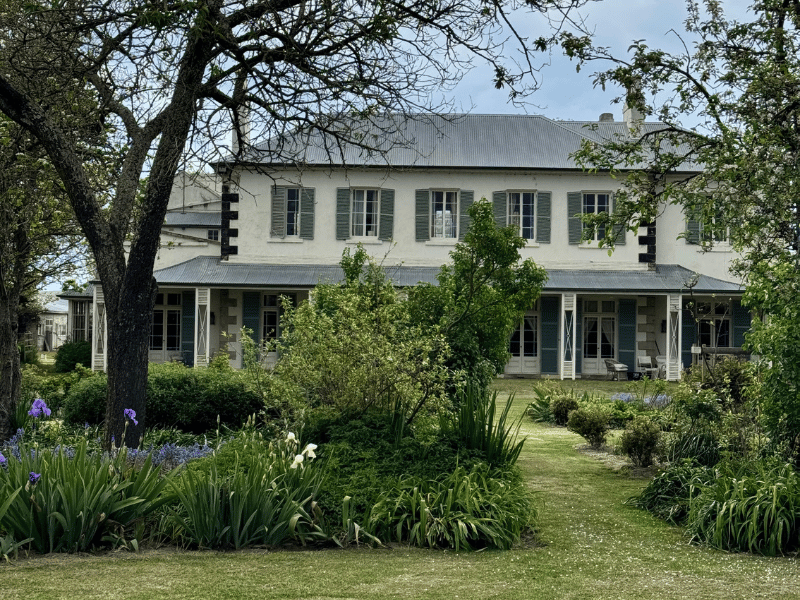
The magnificent gardens surrounding the historic Rossiville Homestead provide stunning views over the Wollondilly River and beyond.
Rossiville Homestead, situated on a 2,560-acre land grant awarded to Captain Francis Nicholas Rossi in 1826, has a rich horticultural legacy. Rossi, who served as Superintendent of Police in New South Wales before later becoming a Magistrate, established the estate and vast gardens that would become known as Rossiville.
Today, the garden retains a few original elements, including a 200-year-old olive tree -believed to be the oldest in NSW – and majestic oaks and elms planted by Rossi. The historic homestead, mature trees, sweeping lawns and expansive rural views give the garden its impressive character.
The current owners have replanted many original exotic species and developed new features behind the coach house, including a caged orchard connected to a chicken coop, a fenced vegetable garden, and a stone pool pavilion.
2. Glendilla Cottage
63 Addison Street, Goulburn
Services: Glendilla cottage will be selling camellias, fuchsias, geraniums, and herbs grown by them.
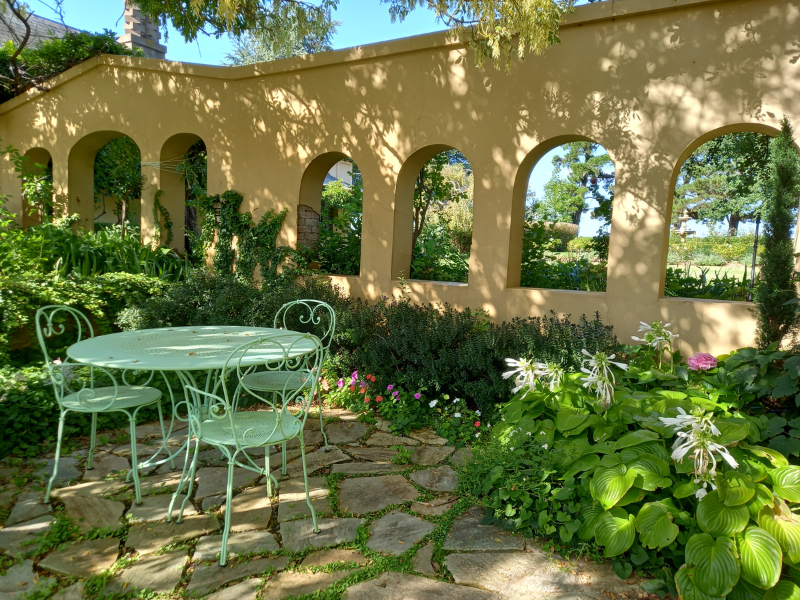
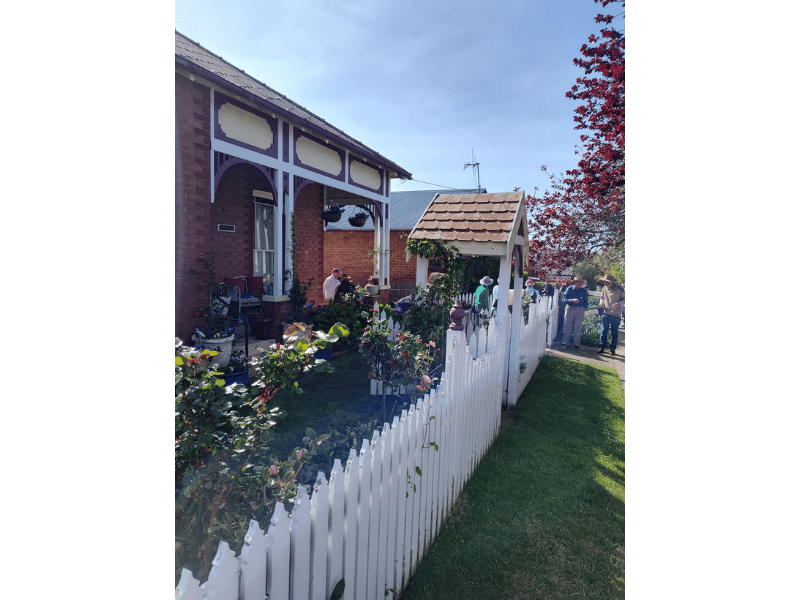
A beautiful, petite cottage garden, Glendilla Cottage, is an exceptional example of what can be achieved on a small, urban block.
The garden has been designed to take advantage of all the four seasons of the Goulburn climate. It provides ample cut flowers and seasonal vegetables, all while being low maintenance.
The present owners have developed the garden over 8 years to suit the needs of their young family and their border collie, Harry. The owners are well known amongst keen Goulburn gardeners for their horticultural expertise, particularly their knowledge of how to successfully grow fuchsias in our difficult Goulburn climate.
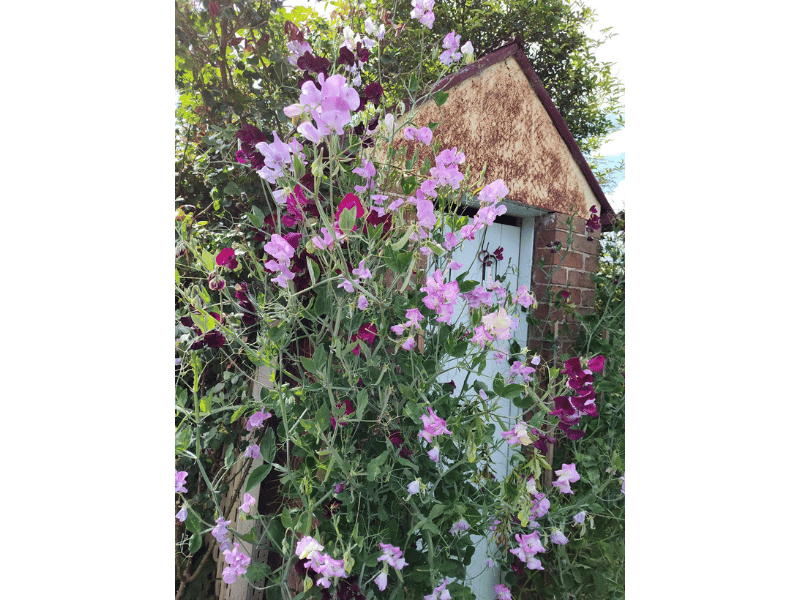
Spring garden delights include sweet peas, daffodils, jonquils, foxgloves, aquilegias, banksia roses and lilacs.
3. Garfield House – Winner – Best Overall and Judges’ Choice, Goulburn Lilac Garden Competition
17 Hovell Street, Goulburn
Services: Coffee and tea available, plant sales, artists Kat O’conner will be selling her artworks and Holdfast Brewery will be selling gin and related items..
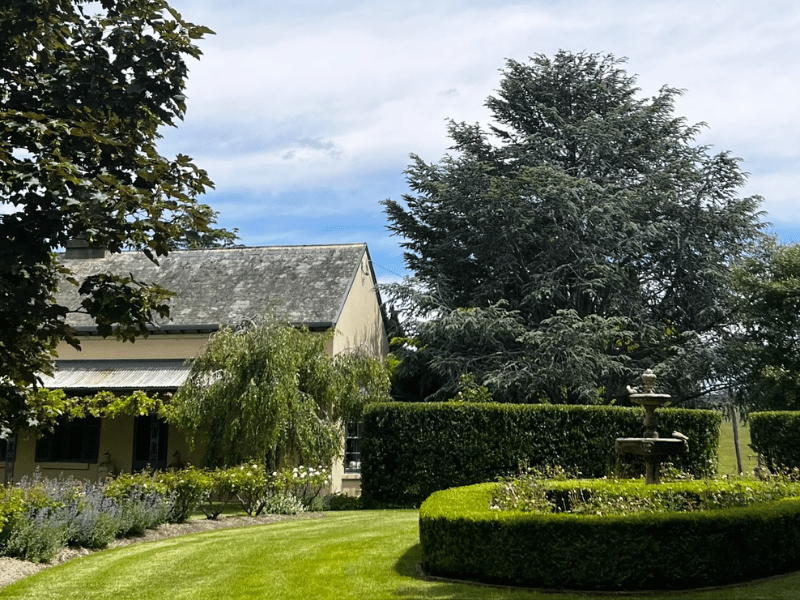
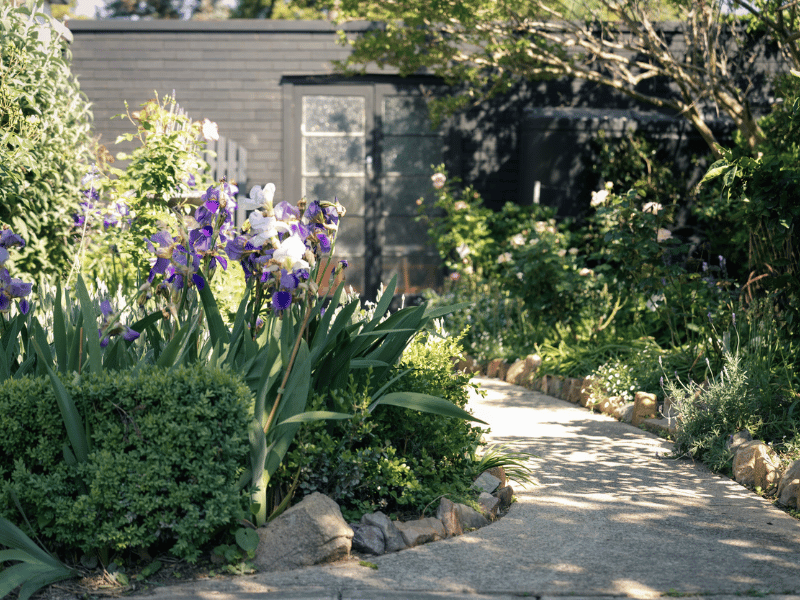
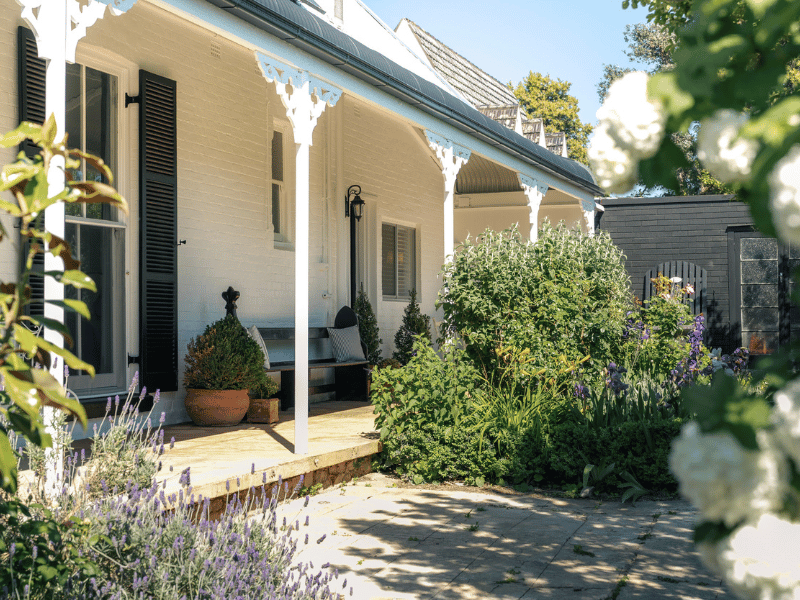
A charming Victorian era blend of the formal and the romantic, the gardens of Garfield House, built around 1840, are a serene sanctuary amid Goulburn’s city streets.
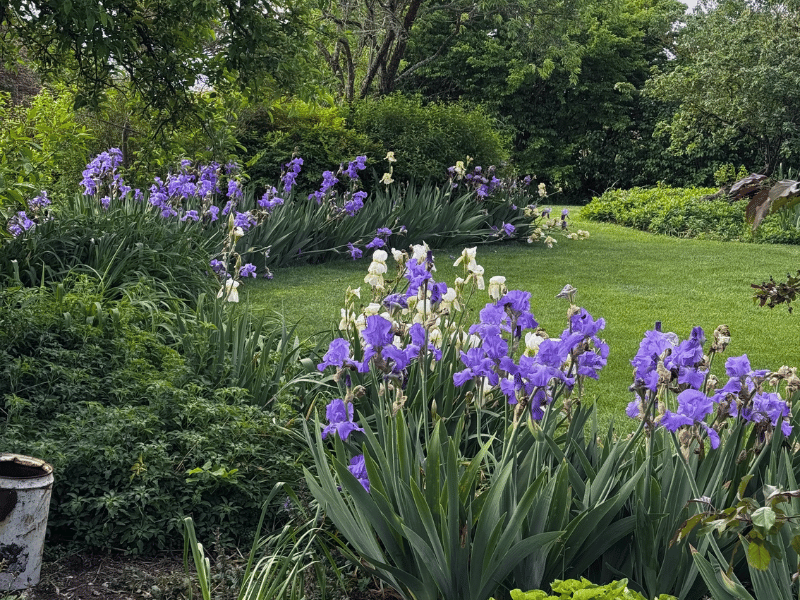
Since taking ownership, the present owners have undertaken a thoughtful restoration and enhancement of the garden’s bones. Anchored by established hedging and mature trees, the design incorporates classic cottage garden plantings including roses, peonies, lavender and irises, interwoven with generous drifts of bulbs in Spring.
Structure and scale are provided by mature trees – crepe myrtles, magnolias and crab apples- alongside a productive orchard of fig, mulberry, nectarine, apple, apricot and plum. A contrasting ‘rainforest garden’, is a lush, shady retreat with tree ferns, maidenhair ferns and philodendrons.
The formal two-tier cast iron fountain is a striking focal point as is the recently added conservatory, framed by agapanthus.
4. Folly Fields
62 Chalker Ridge, Run-O-Waters, Goulburn
Services: Plant stall provided by the Goulburn Argyle Garden Club Inc. Saturday only: Local business Cutabove Tools will be selling their garden tools.
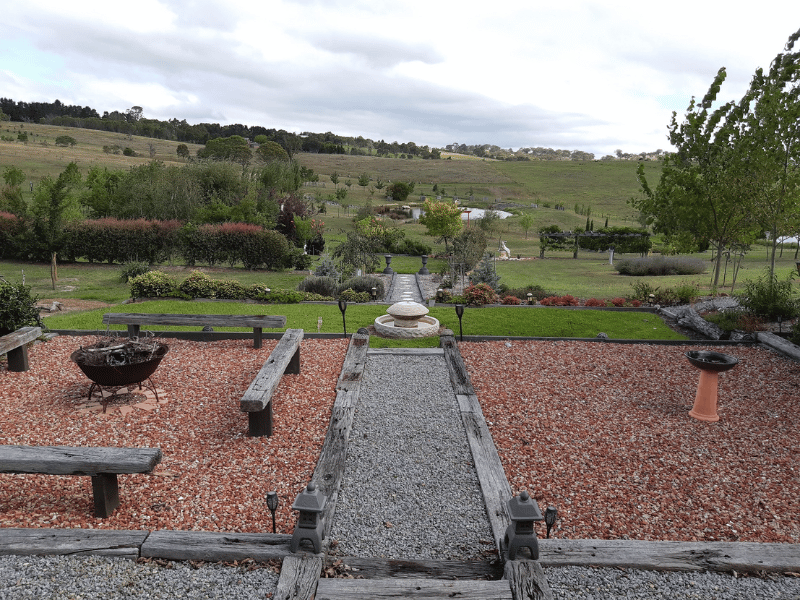
Folly Fields is a garden to delight tree lovers. The garden has been a labour of love for its owners, who have long been involved in gardening and now hold executive positions with the Goulburn Argyle Garden Club. What they have achieved since commencing their 5-acre garden in 2016, is nothing short of miraculous.
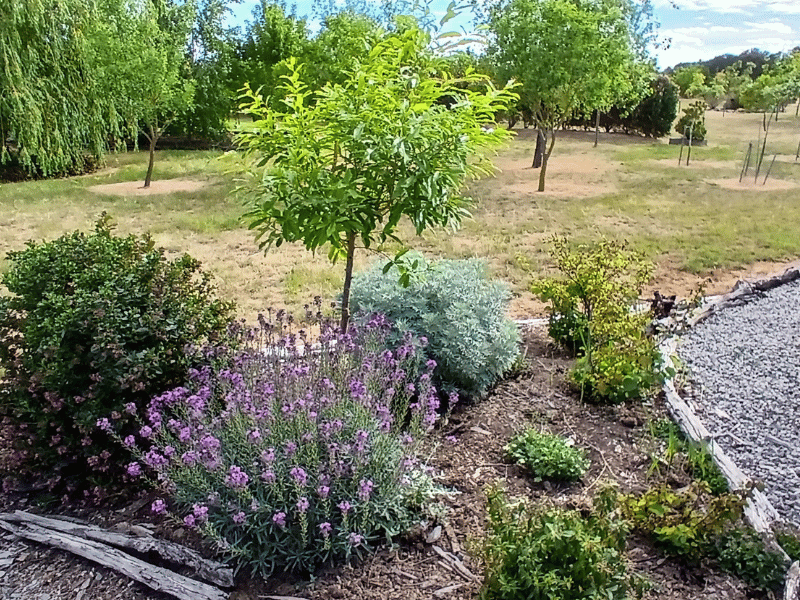
Starting with a blank canvas on an exposed site, with very poor soil and little water, they have planted over 600 trees. The 125 varieties of young trees include fruit trees, eucalypts, conifers, maples and birch tree copses. But there is more to this garden than trees.
The garden is set out in distinct areas and is characterised by a number of small “follies” (giving rise to the property’s name). Other features include a large dam, orchard, wisteria walk, and densely planted garden beds with colourful bulbs, shrubs and perennials.
Folly Fields can be accessed by car, but buses will need to park on the street. Pedestrian access from the street is very steep and only for the fit.
5. Four Winds
1046 Windellama Road, Gundary
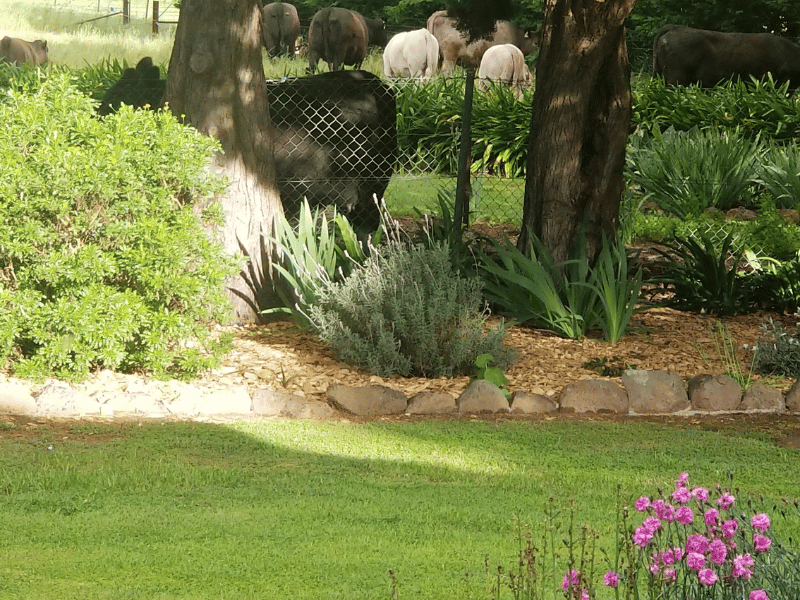
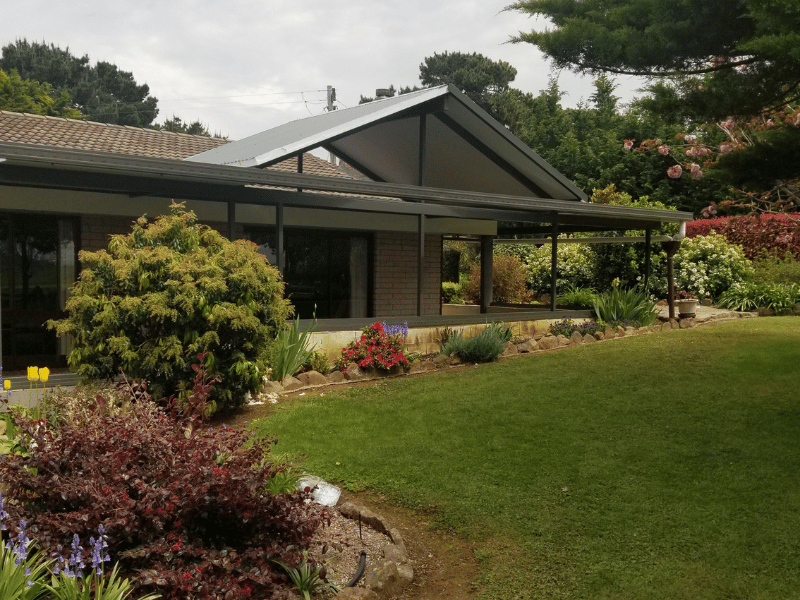
This is a delightful country garden. Four Winds is a testament to the dedication of its owners, who purchased the property 50 years ago, built their house, established a Murray Grey stud and started gardening. The result is a garden with a moving feast of flowers through the seasons. Every stone feature wall and paved path in the garden has been built by hand.
The layout of the garden invites an exploration along winding paths and under arbours, past colourful garden beds and large sweeps of lawn.
Spring will be a visual delight of massed bulbs, flowering cherries, azaleas, rhododendrons, irises, callistemons, grevilleas and eremophilas. All this spring colour is set against an evergreen backdrop of trees and shrubs which are the backbone of the garden. Think camellias, magnolias, clipped photinia and loropetalum, abelias and abutilon.
Access unsuitable for large buses.
6. Brewon
326 Currawang Road, Tirrannaville
Services: A toilet will be available.
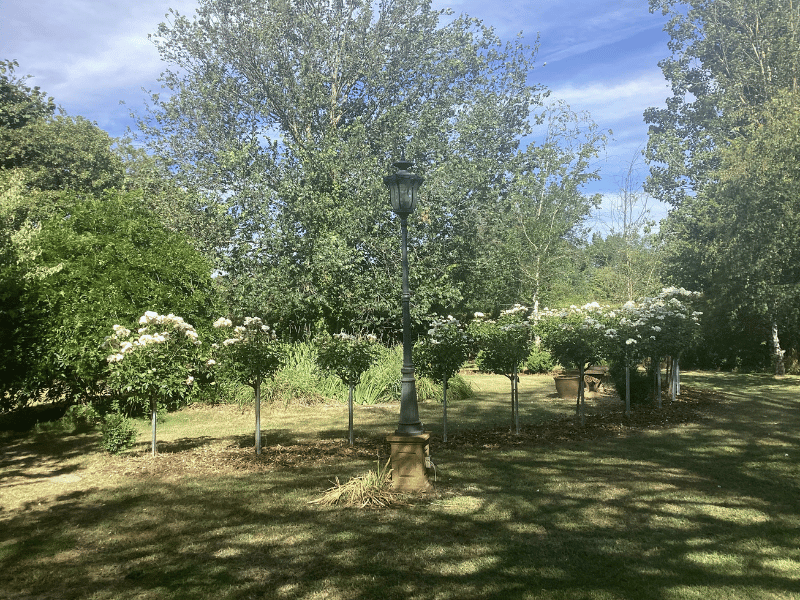
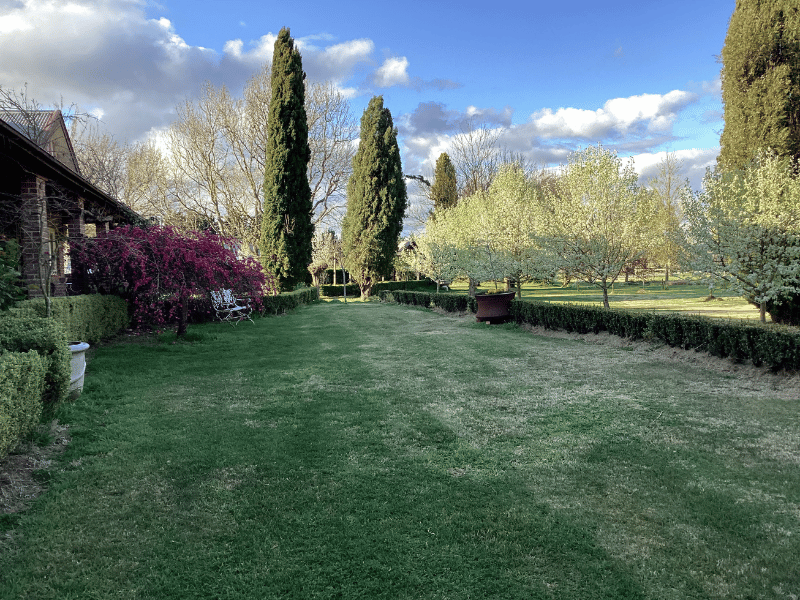
The ‘Brewon’ homestead, built in 1910, sits in a lovely rambling country homestead garden of some 4-5 acres.
The present owners purchased the property in 1988 with a view to running their pony stud on the surrounding 120 acres. In the ensuing 38 years, they have renovated and extended the garden around the homestead as a private retreat for their family.
The garden features many deciduous trees including english oaks, ginkgo, snow pears, claret ash, elms, chinese elms, weeping almond and cherries and a large mature liquidamber. An avenue of robinia mop tops, hedges of english box, photinia and green euonymus also feature. The lilacs will be an attraction in Spring, together with the 100-year-old wisteria which will add colour and fragrance to the gardens. The varied plantings, along with extensive sweeping lawns, bestow a quiet, relaxing ambience.
7. Providence
32 Bangalore Place, Tirrannaville
Services: Coffee and tea by Baa Ram Brew . Saturday morning only – Local artist Vicki Corser of Gallery Fifty One will be doing a Plein Air painting of the garden’s native flowers.
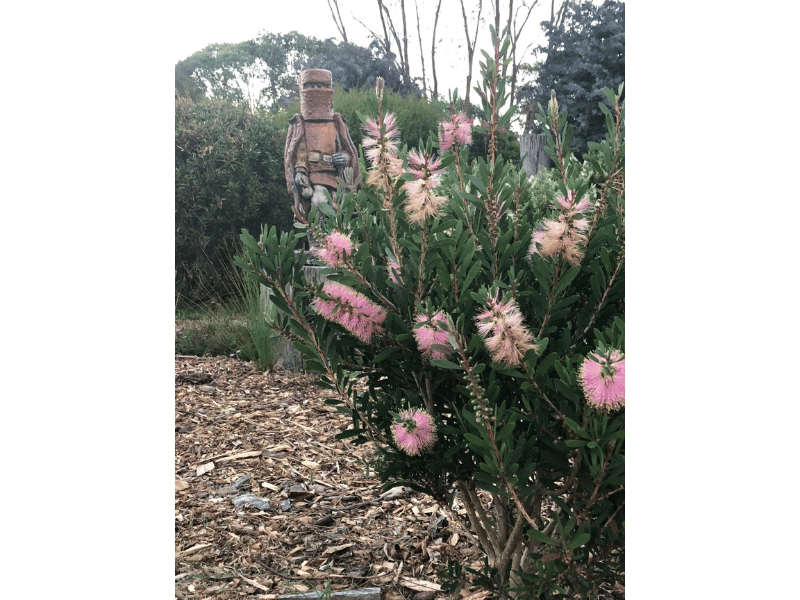
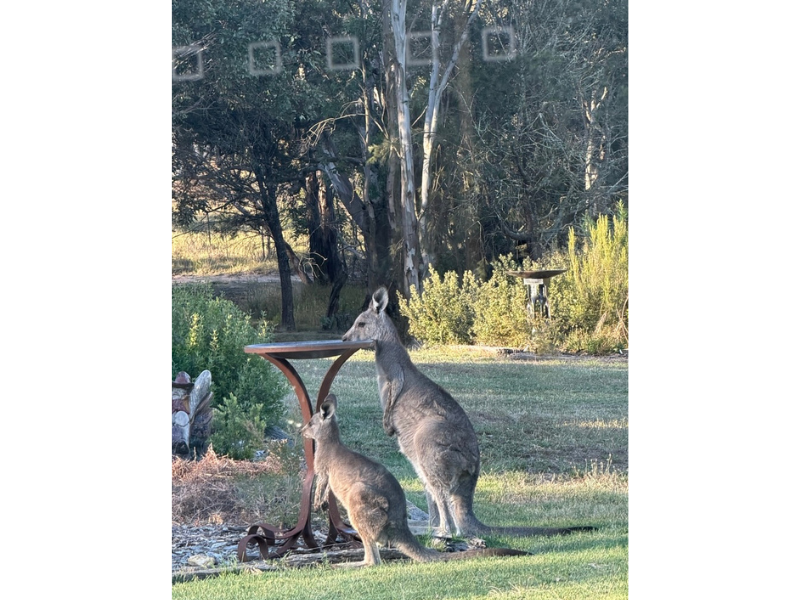
Featured in Australian Country magazine’s Aug-Oct 2026 issue, the Providence Garden is a large native garden which sits on a hillside offering sweeping views over the Mulwaree plains. When the owners purchased their property 15 years ago, their vision was to turn the 5-acre home paddock into a wildlife refuge.
They planted acacias, banksias, callistemons, grevilleas and grass trees just to name a few. Locally sourced eucalypts and wattles, about 2,500 of them, provide protection from the wind and safe nesting sites and food for birds throughout the paddocks. Today they have been rewarded with a dramatically increased bird population, an abundance of butterflies and bees and wildlife visiting on a regular basis.
The garden is very informal, and recycled materials are used where possible. The owners enjoy breeding lambs, growing fruit and vegetables and their chickens have found a happy home here.
8. Wollogorang
164 Wollogorang Road, Wollogorang
Landscape Architect, Michael Bligh, will be on site on Saturday 17 October.
Wollogorang is one of the region’s original great estates.
Built in the 1840’s by Captain Henry Edenborough, the historic house is typical of grand 19th century rural architecture with tall windows framing picturesque pastoral views and a large verandah on its northern face. The Chisholm family, well-known early settlers in the district, occupied the homestead in its glory days between 1854 and 1912. Sheila Chisholm, born and raised at Wollogorang, achieved fame as a London socialite and friend to King Edward VIII and his brother King George VI.
The historic gardens, attributed to the Watson family who bought Wollogorang in 1912, were developed in three concentric rings and are a significant feature of the homestead. Spring will be abundant with flowering bulbs, cherries, irises, crabapples, lilacs and dogwoods. The backdrop of huge, old trees enhances its character.
A Map of the Gardens